Commercial Moves in Catford
If you are planning Commercial Moves in Catford, you are likely dealing with more than just boxes and furniture. A business relocation can affect staff routines, customer service, stock handling, IT equipment, deadlines, and day-to-day trading. Whether you are moving a small office, a retail unit, a workshop, a clinic, a school department, or a shared workspace, the right moving support can make the difference between a smooth transition and a stressful shutdown.
Catford is a busy part of South East London with a mix of high-street businesses, office spaces, independent shops, cafés, professional services, and light industrial premises nearby. That variety means no two moves are exactly the same. Some commercial properties have tight stairwells, others sit on busy roads with limited stopping space, and many require careful coordination to reduce disruption for staff and customers. A local team that understands the area can plan for these challenges in a practical way.
This page is designed to help local business owners, facilities managers, landlords, and office administrators understand what is involved in a commercial relocation, what services are typically included, and how to prepare. If you need commercial moving services in Catford, or you are comparing options for a business removal in nearby areas, you will find useful information below to help you book with confidence.
Why businesses in Catford need a tailored moving service

Business moves are rarely straightforward. A company relocation usually involves packing sensitive equipment, protecting documents, moving furniture safely, and ensuring the business is ready to reopen as quickly as possible. That is especially important in Catford, where many premises serve customers directly and cannot afford long periods of downtime. A well-organised move helps protect revenue, reduces stress for staff, and keeps operations moving.
Catford has a practical mix of property types, from high-street units and office spaces to shared commercial buildings and converted premises. These spaces often come with access issues such as narrow entrances, loading restrictions, stairs, lift limits, or nearby traffic that can affect how a move is carried out. A local commercial removals team can factor these details into the plan before moving day begins.
For businesses handling stock, files, computers, specialist tools, or fragile displays, the service needs to be more than a man-and-van approach. It should be structured, careful, and adaptable. When people search for commercial moves in Catford, they are usually looking for a team that can manage the entire process with minimal disruption, sensible timing, and enough flexibility to handle real-world conditions.
Types of commercial moves we help with

Every business has different priorities. Some need a full office relocation over a weekend, while others need a phased move to keep trading during the week. Some require a small team to shift furniture from one floor to another, while others need support moving larger equipment and multiple workstations across town. The best service is the one shaped around your business, not the other way around.
Common commercial relocation jobs in Catford and the surrounding area include office removals, shop moves, hospitality venue relocations, clinic and practice moves, warehouse transfers, studio moves, and moves for local charities or community organisations. Each type has its own handling requirements. For example, a retail move may depend on display protection and stock categorisation, while a professional office move may focus on desks, monitors, archive boxes, and IT setup support.
In many cases, business customers also need help with internal moves, such as rearranging departments, moving into a different floor within the same building, or clearing a unit ahead of refurbishment. These jobs may seem smaller, but they still require planning, secure lifting, and an organised approach so staff can keep working safely around the move.
What is usually included in a commercial move

A professional business relocation should be clear about what is covered and how the work is delivered. While every move is different, many commercial moves in Catford include a combination of packing, dismantling, loading, transport, unloading, and placement of items at the destination. The right service may also include pre-move planning to reduce delays and help you prepare in the right order.
Typical inclusions may involve:
- Initial discussion of the move size, timings, and access requirements
- Assessment of furniture, stock, and equipment to be relocated
- Packing support for office items, files, retail stock, or fragile goods
- Dismantling and reassembling desks, shelving, and modular furniture
- Careful loading and unloading using the correct lifting methods
- Transport between the old and new premises
- Placement of items in the right rooms or zones at the new site
- Optional coordination around out-of-hours or weekend working
Some customers also need help with labelled box systems, document handling, or separating items by department. This is especially helpful for larger offices, shared workspaces, and companies with multiple teams. A structured approach reduces confusion when staff arrive at the new location and need to get back to work quickly.
How a commercial move in Catford usually works

The process often starts with a conversation about the size of the business, the types of items being moved, and the deadline for completion. If you are relocating from a busy Catford high-street site, a quieter side road, or a multi-storey office building, the moving plan should reflect the access conditions, parking options, and the need to work around trading hours or shared building rules.
After the initial discussion, many businesses choose to create a simple floor plan for the new premises. This helps decide where furniture, equipment, and boxes should go, saving time on arrival day. It can also help avoid unnecessary handling, because items can be unloaded directly into the right areas instead of being moved multiple times.
A typical move flow may include:
- Survey or move discussion
- Confirmation of dates, timings, and access details
- Packing or pre-labelling of items
- Dismantling of furniture if needed
- Loading and transport
- Unloading, placement, and basic reassembly
- Final checks to confirm everything is in the correct place
If you are planning a business relocation around Catford, Hither Green, Lewisham, Bellingham, Forest Hill, or Sydenham, this kind of staged approach is especially useful because traffic, road access, and building restrictions can all affect the timing on the day.
Preparing your business for moving day
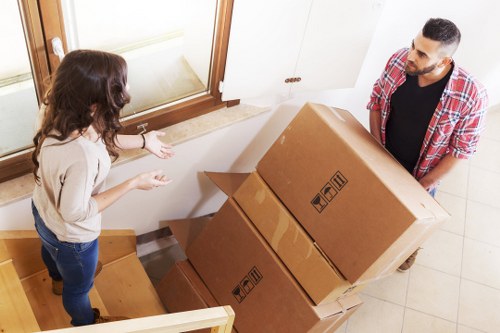
Good preparation makes a huge difference to the success of any commercial move. Even a small office can lose time if items are not labelled properly or if staff are unsure what should be packed first. The aim is not just to move everything; it is to make sure the business can restart efficiently once it arrives at the new address.
Useful preparation steps include:
- Back up important digital files before the move
- Label boxes by department, room, or priority
- Separate items that need special handling, such as computers or fragile stock
- Remove personal belongings from desks and storage areas
- Notify relevant staff about packing deadlines
- Plan for IT disconnection and reconnection if needed
- Identify any items that should be moved first or last
- Reserve loading space where possible, especially on narrow Catford roads
It is also wise to think about building access in advance. In Catford, some commercial premises have limited parking, shared entrances, or loading areas that are not available all day. If that applies to your property, make sure the move team knows about it early so they can plan the vehicle position, carry distances, and arrival time appropriately.
For businesses moving stock or stockroom items, a simple inventory list can help prevent confusion. It does not need to be complicated. Even a numbered list by shelf or section can help staff check that everything has arrived safely and in the correct order.
Local knowledge matters for commercial removals
Choosing a local team for Commercial Moves in Catford has practical advantages. A mover familiar with the area is more likely to understand common access limitations, busier traffic periods, and the kinds of building layouts found across the locality. That can save time when planning arrival windows and loading arrangements.
Local knowledge also matters when a business move involves nearby areas. Catford businesses often serve or trade across Lewisham, Ladywell, Brockley, Forest Hill, Sydenham, Beckenham, and the wider South East London area. If your move involves multiple stops, temporary storage, or different branches, a local removals team can often coordinate routes more efficiently than a company unfamiliar with the area.
Another advantage is flexibility. Business needs can change quickly. A delivery may arrive late, a room may not be ready, or a client appointment may shift the move timetable. A local commercial removals service is usually better placed to adapt to these changes without creating unnecessary disruption for your team.
Property types and access challenges in Catford
Commercial properties in Catford range from compact high-street units to larger offices and mixed-use buildings. This variety creates different moving challenges. A shop with pavement access might need a very efficient loading sequence. An office above street level may need extra planning for stairs or lifts. A shared business premises may also have stricter booking rules for access and delivery times.
Parking can be one of the most common issues. Some roads are narrow, some have limited waiting space, and some businesses sit on busy stretches where stopping needs to be carefully managed. If your property is on or near a main route, it helps to plan how far items will need to be carried between the vehicle and the building. That distance can affect labour time, lifting effort, and the overall pace of the move.
Other common considerations include door widths, turning space, floor protection, lift capacity, and whether fragile items need special handling. In older buildings, staircases and corridors may be tighter than expected. In newer office spaces, access may be controlled by building management or require advance booking. These details are important because they influence the sequence of the move and the number of people needed on site.
Commercial customers we regularly help
Business relocation services are often requested by a wide range of customers, each with different priorities. A small business owner might want a fast evening move after the shop closes. A facilities manager might need a controlled phased relocation across several days. A landlord may require a tenant clear-out before a refurbishment project begins. All of these are common commercial scenarios that need reliable handling.
Examples of commercial customers include:
- Independent offices and professional practices
- Retail units and showrooms
- Cafés, restaurants, and hospitality businesses
- Clinics, therapy rooms, and health-related practices
- Creative studios and production spaces
- Warehouses, stockrooms, and light industrial spaces
- Charities, community groups, and educational organisations
Because each customer type has different operational needs, it is important to choose a service that is comfortable with both small and larger-scale business moves. A good moving team should be able to follow instructions carefully, work around your trading schedule, and protect items that are important to the running of your organisation.
Benefits of using a professional commercial moving team
Moving a business yourself can seem cost-effective at first, but the hidden costs can add up quickly. Staff time, equipment damage, delays, and disorganisation at the new site can all create problems. A professional commercial removal service helps reduce those risks by handling the physical move in an orderly and efficient way.
Key benefits include:
- Reduced downtime for your business
- Safer lifting and handling of bulky or fragile items
- Less pressure on your staff
- More organised unpacking at the new premises
- Better protection for desks, stock, files, and equipment
- Clearer planning around access, traffic, and timing
There is also value in having a team that understands the practical side of business relocation. For example, some items need to be prioritised so staff can start work immediately. Others may need to be left until last, such as loose stock or furniture that is still in use right up to the move date. A professional approach keeps those decisions under control.
Pricing factors for commercial moves
Business customers often want to understand what affects the cost of a commercial move before they commit. While exact prices depend on the job, several common factors usually influence the quote. The more clearly these are discussed upfront, the easier it is to plan the move realistically and avoid surprises later.
Typical pricing factors include:
- Size of the premises and volume of items being moved
- Distance between the old and new locations
- Access conditions at both properties
- Whether packing or dismantling is required
- The number of staff needed for lifting and loading
- Any after-hours, weekend, or phased move requirements
- Special handling for fragile, heavy, or awkward items
If your business is moving within Catford, the relocation may be simpler than a cross-London transfer, but access still matters. A short journey does not always mean a simple job. Narrow roads, parking issues, stairs, or multiple floors can still add complexity. That is why an accurate discussion of the property is so useful before booking.
How to choose the right commercial move provider
When choosing a company for commercial moving services in Catford, focus on the details that affect your business most. You want a team that communicates clearly, understands time pressures, and can adapt to the realities of your premises. It is not just about lifting and transport; it is about protecting your schedule and keeping your operations on track.
Helpful things to look for include:
- Clear explanations of what is included
- Experience with office, retail, and mixed commercial moves
- Willingness to discuss access and parking before move day
- Support with packing, dismantling, or reassembly if required
- A practical approach to timing and coordination
- Understanding of local roads and nearby business districts
It is also sensible to choose a company that listens carefully to your priorities. For some customers, the most important point is moving outside opening hours. For others, it is the handling of electronics, archives, or display furniture. The right provider should be able to respond to those requirements in a straightforward way.
Areas covered around Catford
Businesses do not always move just within one postcode or one high street. Many Catford customers need removal support across nearby neighbourhoods, and that is where local coverage becomes especially useful. A team based in the area is often better positioned to manage short-notice changes, local access knowledge, and moving routes through South East London.
Nearby areas commonly covered include:
- Lewisham
- Ladywell
- Bellingham
- Forest Hill
- Sydenham
- Brockley
- Hither Green
- Honor Oak
- Beckenham
If your business is relocating between Catford and one of these surrounding areas, a local commercial removals service can help coordinate the route, timing, and access requirements without overcomplicating the day. That is particularly useful for companies with staff arriving at different times or with items being delivered to more than one destination.
Office moves, retail moves, and specialist handling
Different types of business premises demand different moving methods. Office moves often require workstation labelling, file organisation, and care with IT-related items. Retail moves may involve shelving, stock, display units, signage, and merchandising materials. Healthcare or wellbeing practices may need a quieter, more controlled approach to preserve privacy and order.
Specialist handling may be needed for:
- Computer equipment and monitors
- Printers, routers, and office peripherals
- Cabinets, shelving, and storage systems
- Retail stock and display materials
- Fragile items, samples, or presentation pieces
- Archived files and confidential paperwork
In some cases, businesses also need temporary storage or a staged move. This can be useful if the new site is not ready all at once, or if you are working around refurbishment. A sensible moving plan can be broken into smaller parts so your business can keep functioning during the transition.
Preparing for minimal business disruption
One of the biggest concerns for any company planning a move is downtime. The goal is to complete the relocation without affecting customers more than necessary. That means thinking carefully about when the move should happen and which items are essential for day-one operations at the new location.
Ways to reduce disruption include:
- Scheduling the move outside of peak trading hours
- Identifying essential equipment that must be set up first
- Separating daily-use items from long-term storage items
- Giving staff clear packing deadlines
- Preparing the destination space before the move starts
- Keeping a simple checklist for reopening tasks
For Catford businesses on busy roads or in shared premises, it may also help to communicate the move schedule to building managers, neighbouring units, or department leads in advance. This reduces confusion and can make access smoother on the day.
What makes a local business move service useful
There is a real advantage in working with a local company that understands Catford’s rhythm. A local team is often more responsive, more flexible, and more aware of the practical issues that arise when moving around South East London. For business customers, that can translate into better planning and fewer last-minute complications.
Local expertise is useful because it helps with:
- Familiarity with busy routes and side streets
- Understanding of parking and waiting constraints
- Quick coordination for nearby moves
- Practical advice for mixed-use and older buildings
- Efficient service for small, medium, and larger business premises
If you are comparing options for commercial relocation in Catford, choosing a team that works regularly in the area can give you more confidence in how the day will run. That local knowledge is especially helpful when the move involves multiple floors, tight access, or a need to work carefully around staff and customers.
Frequently asked questions
Below are answers to some common questions from local business owners and managers considering Commercial Moves in Catford. These are designed to help you plan ahead and decide what level of support you may need.
How far in advance should I book a commercial move?
It is sensible to book as early as possible, especially if you want a specific date, weekend slot, or out-of-hours moving time. Larger moves or premises with access complications usually benefit from more lead time so the plan can be prepared properly.
Can you move offices outside normal business hours?
Many businesses prefer evening or weekend moving to reduce downtime. If that is important for your company, it should be discussed during the planning stage so the timing can be arranged around your trading needs and building access.
Do I need to pack everything myself?
That depends on the level of service you want. Some customers prefer to pack internally using labelled boxes, while others want packing help for furniture, files, stock, or fragile items. It is best to choose the approach that saves time without creating confusion.
What if my premises has limited parking?
Limited parking is common in many parts of Catford. The move can still be managed, but the route from the vehicle to the building should be planned carefully. Make sure any restrictions, permit issues, or loading limitations are shared in advance.
Can you help with dismantling and reassembly?
Yes, many commercial moves include dismantling desks, shelves, or modular furniture and reassembling them at the new site. This is particularly useful for offices and retail settings where furniture needs to be moved efficiently and set up quickly again.
What should I do with confidential files?
Confidential paperwork should be separated, labelled clearly, and handled according to your internal procedures. Many businesses create a dedicated file category so important documents stay organised and are not mixed in with general packing.
Is a small business move still worth professional help?
Absolutely. Even a small relocation can involve heavy lifting, timing issues, and equipment that needs careful handling. Professional help can reduce the strain on your staff and make sure the move is completed in a tidy, controlled way.
Ready to plan your move?
If your business is preparing for a relocation, internal reorganisation, or premises change in Catford, the best time to start planning is now. A well-managed commercial move can protect your stock, equipment, and working time while helping your team settle into the new space faster.
Whether you are moving a compact office, a retail unit, or a larger commercial premises, a local team can help you organise the process in a way that suits your schedule. From access planning to careful handling and delivery to the right rooms, the aim is to keep everything as smooth and practical as possible.
Contact us today to discuss your requirements, request a free quote, or book your service now. If you need a dependable approach to commercial moves in Catford, getting the conversation started early is the simplest way to make the move easier for everyone involved.